These days, one needs a degree in medieval studies to make sense of the daily news.
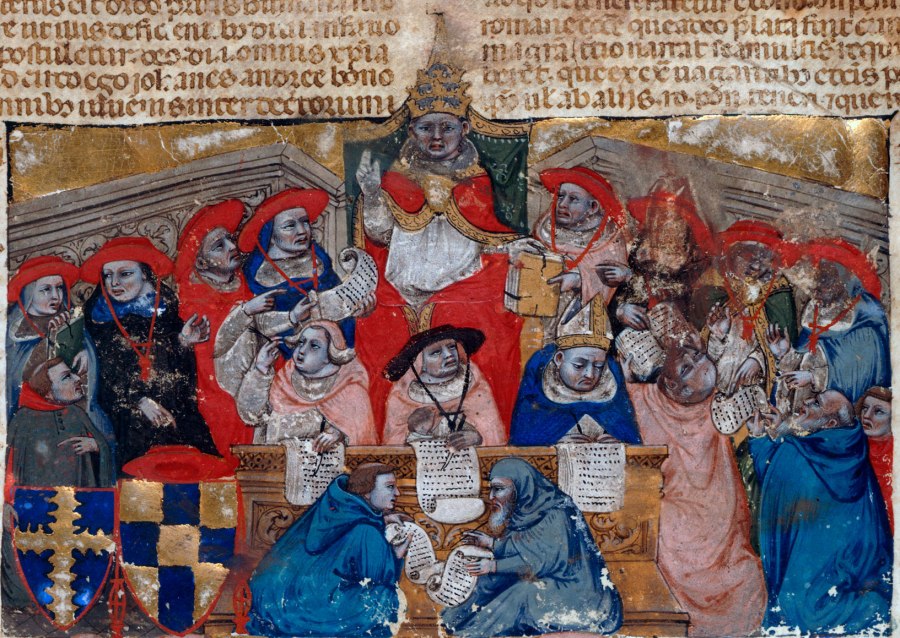

These days, one needs a degree in medieval studies to make sense of the daily news.
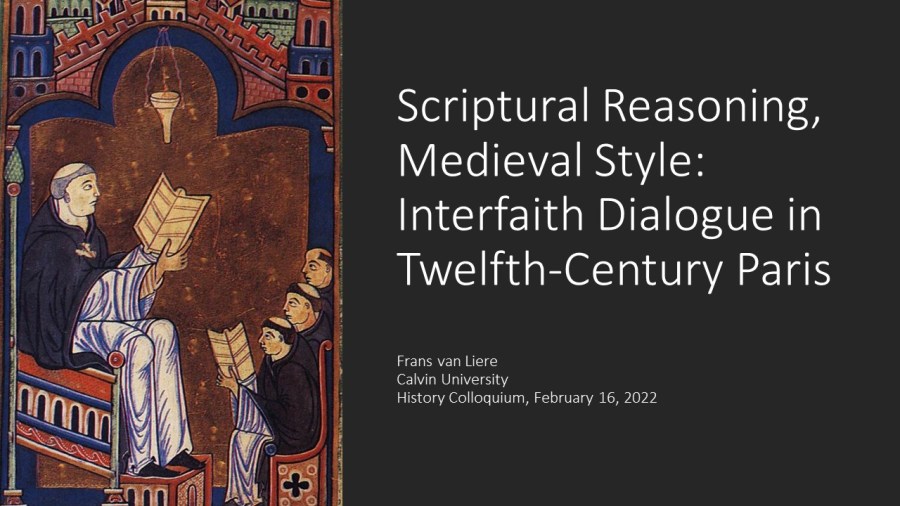
1150. Unlike most of his contemporaries, Andrew often spurned the Christian meaning of the text, in favor of interpretation he found in contemporary Jewish commentators. In this text, we can see him grapple with faith traditions other than his own, and come to sometimes surprisingly new insights, in dialogue with the rabbis of the Jewish community in Paris. In Andrew’s commentaries, we hear a voice that stands in stark contrast to our common image of the medieval world as dominated by Crusades and religious persecution.
by Frans van Liere. In 1348, a terrible epidemic arrived in Avignon. It had spread from Italy, but its origins were somewhere in Central Asia, on what is now the border between Xinjiang and Kyrgyzstan. For the next seven months, the Black Death ravaged this small city on the Rhone river in southern France, and …
Continue reading The Pope and the Plague
by Frans van Liere The story of the Four Sons of Haymo was widely popular in the late middle ages and Renaissance, especially in France and in the Low Countries, where I grew up. As a boy in school, I learned a song about the “Vier Heemskinderen” (as it is called in Dutch), and their …
Continue reading Recovering Lost Stories
by Frans van Liere. In my last entry for Historical Horizons, I wrote about how archaeology can be a tool for colonialism. For the Palestinian inhabitants of the village of Silwan, the Israeli archaeological park of the “City of David,” situated right in their West Bank village, bears a clear message: you don’t belong here; …
Continue reading Building Community among the Ruins
by Frans van Liere. More than any history book, archaeology can create a powerful sense of the past. At the same time, just like history, archaeology can be used and abused for political purposes. It can create a sense of national or ethnic identity, or exclude others from that identity. This past summer, when my …
Continue reading Hezekiah’s Tunnel and the City of David


