Will Katerberg and Rachael Copelin
A couple of my colleagues and I regularly represent the Historical Studies department at enrollment events, where we talk with potential students (and their parents) about coming to Calvin to study history. Some of these students know what they want to do with a history degree, often with a second major or a minor or two: teaching; law; documentary filmmaking; the military; politics; archival, library, or museum work; foreign policy; archaeology; medicine.
Many students don’t know what they want to do, but they know they love studying the past. They—or their parents—often want to know what kinds of jobs history majors end up doing.
When he answers that question, Will Katerberg often emphasizes that graduates are likely to do a variety of kinds of work, have several different careers, rather than work in one field. So, it is important that they understand what their “thing” is. What do they love? What are they good at? What is the sensibility, the inclination, that they are likely to carry with them from job to job over their career? This “thing” will probably shape their personal life, family life, church life, etc., too.
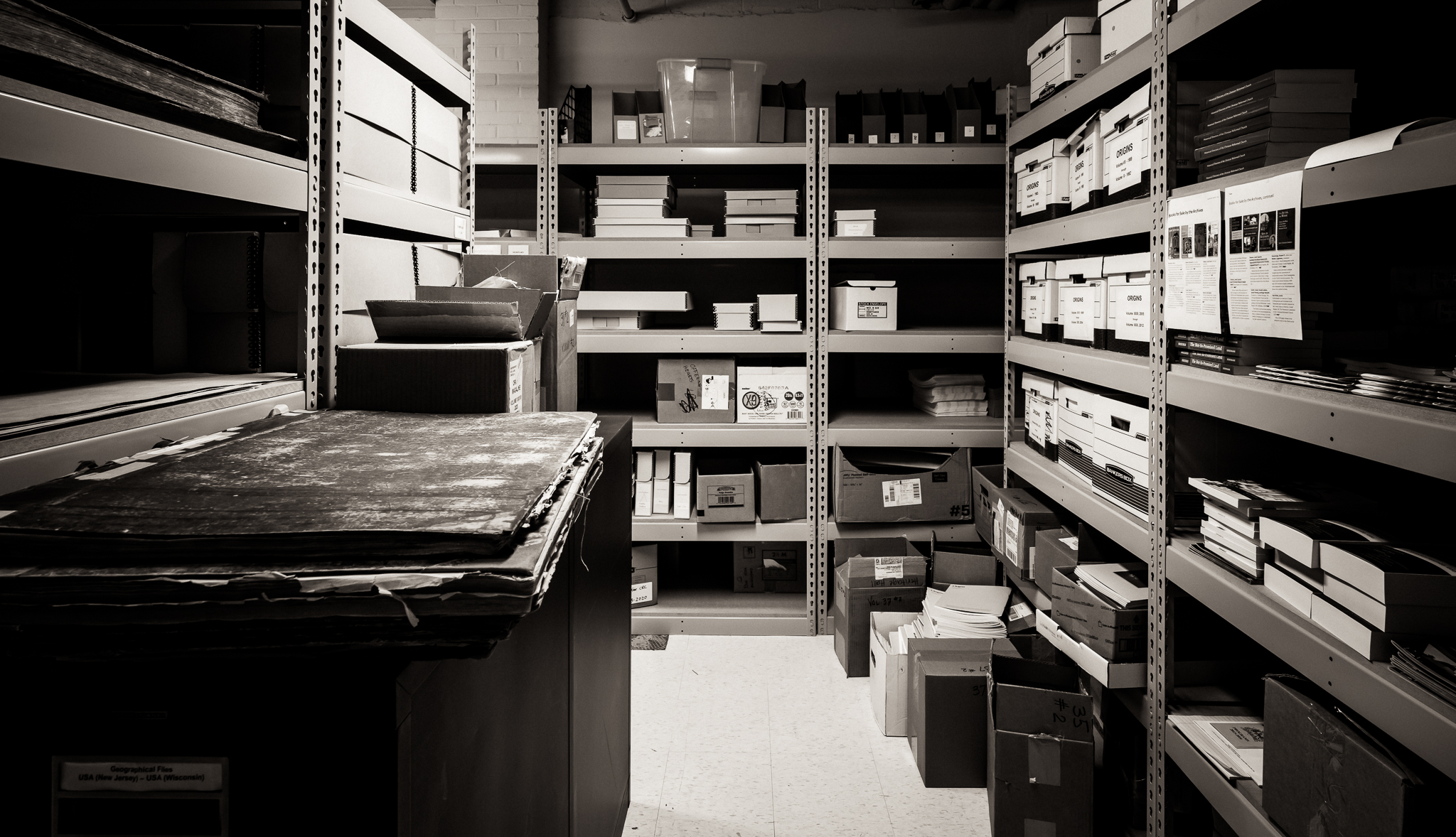
Will often tells prospective students that not just as a historian, but as a department chair, associate dean, editor, and archivist, his primary “thing” has been storytelling. So, I decided to ask him to share more about this idea to help students imagine how they might take a history major in many directions and a variety of jobs and careers—in every case, hopefully, doing something they love and that reflects something essential about who they are.
1. So, Will, let’s start with what you mean by saying storytelling is your “thing”?
Part of it is that I love reading stories, and watching them, and always have. I devoured fiction as a kid, but also history books, especially military history. I’d bring home a half a dozen books a week and read them furiously, imagining myself in them. Another part of it is that I love to tell stories and all the work that goes with it. Writing is a lot more work than reading, and it took me a long time to learn how to do it well and to love doing it. Now I’m hooked. Figuring out a topic and researching it; deciding who my audience is; figuring out what the story is and how to tell it and argue it. And then writing it or talking about it for the audience I have in mind.
But it’s more than that. It’s also that when I’m doing many things, or first learning how to do a new task or job, I approach it as if I’m doing what I love most and what I’m best at—researching, figuring out, and telling a story. Developing a new program as a department chair or dean? Make it a story. Convincing a donor or foundation or government agency to give me money for a project? Sell it to them with a good story. Making a decision about doing something with a collection of material for the archives? Figure out what kinds of stories it can help someone tell. Convince students to come to Calvin? Help them connect their stories, as they imagine their lives in the future, to what Calvin can do for them.
Storytelling is how I relate to other people. One of the things I love doing is editing. I’ve edited books, a scholarly journal, and now a magazine. I love helping authors, whether my students or other writers and scholars, to figure out their stories and tell them as best they can for the audience they are writing for. So, in a sense, communicating and interacting with people is my thing as much as storytelling.
2. That’s really interesting. Let’s dig into this in more detail. Why did you become a history major? What is it about studying history that you enjoy?
I became a history major by following my inclinations and what most made me curious to learn more. In my first couple of years of college I took a lot of religion, political science (especially political theory), philosophy, and English courses, as well as history courses. What I liked about history, and why I chose it as a major, was that it seemed to include all the things I liked about the courses in other disciplines: the variety of topics and especially my interest in ideas. I did not know it at the time, but I was in the process of becoming a historian of ideas and culture, not just learning content from those other disciplines but skills, inclinations, and habits that helped me analyze texts. I came close to finishing minors in political science and English and close to a major in religion. History was simply the best way I found to pull my interests together. I didn’t worry about whether I checked the boxes to finish those other majors and minors, I just took what interested me and seemed to round out my interest in the history of ideas and culture. It was all just “play” for me.
3. How did you end up becoming a history professor? Did you consider any other careers?
In my third year, finally, I started thinking about what was next. I knew what I did not want to do: Teach middle school or high school. I considered journalism but decided I was not really interested in that. I thought about law school and decided that was an option. It seemed interesting—at least on TV, though I knew the reality was not that exciting—and it involved the same kind of research, analysis, arguing, and storytelling skills that made me a good history, English, religion, and political science student.
When a couple of professors suggested that I might enjoy grad school in history and might make a good scholar and professor, that became my default option. Get paid to study in grad school? I was all for that. Get paid to read history? Yes! Teach? I thought that I might enjoy that. At least college students choose to be there. But that was more a necessary part of making a living, not the part that made me excited. I did not really realize that I had come to love teaching, and also mentoring grad students and faculty in my work as an editor, until much later. It was a bit of a surprise to me. But that’s my second “thing”, as it turns out. Working with, hanging out with, interesting people. Universities are great places for that. (Not the only great places, but among the best!)
4. What kind of skills does it take to be a good historian?
The first thing, I think, is not so much a set of skills as some characteristic inclinations or sensibilities. Like scholars in other disciplines, an inclination to curiosity and following your nose is essential. Just enjoying exploring for its own sake, not with a predetermined goal in mind. A tendency to think in terms of changes over time. And a curiosity about why societies in the past, even your own, thought and did things in very different, seemingly alien ways, and a desire to understand why that made sense to them in a way it does not to you, at least not at first or second glance.
The skills that historians need follow from their inclinations. I love figuring out ideas, and so I am drawn to “hermeneutical” skills (interpretation)—skills that help me make sense of texts. I’ve learned a lot from philosophy, social theory, and literary criticism about making sense of texts. Another scholar might be inclined to the details of social history and develop the skills needed to analyze immigration documents, business records, population records, and the like to reconstruct social patterns—likely borrowing from skills and methods in the social sciences. Environmental historians often adopt some of the habits and methods that biologists and geologists learn. It’s probably my bias, but I think history is the most “liberal artsy” of the disciplines, because it’s so profligate in borrowing from all areas of study.
Thanks, Will! Stay tuned for “Figuring Out Your ‘Thing’ as a History Major: Part 2”.
William Katerberg is a professor of history and Director of the Mellema Program in Western American Studies at Calvin University. He is also the curator of Heritage Hall, the archives for Calvin University, Calvin Theological Seminary, and the Christian Reformed Church in North America. Finally, he is the editor of Origins, the blog and magazine published by Heritage Hall.

 Historical Horizons