Frans van Liere
These days, one needs a degree in medieval studies to make sense of the daily news.
The Independent reports that “Pope Leo XIV appears uninclined to visit [the] US for [the] remainder of Trump’s term.” On July 4th, he will not attend Trump’s carefully choreographed celebration of the 250th anniversary of the Declaration of Independence, but will instead visit the Island of Lampedusa, a small spot in the Mediterranean sea between Libya and Sicily, where many migrants have recently been stranded in a desperate journey to reach the E.U. Apparently the pope does not wish to be a prop in what no doubt will be a shameless display of Trumpian self-promotion.
It now seems that the papal decision not to visit the U.S.A. may have had even deeper reasons. According to a report of The Free Press, tensions between the pope and the Trump administration went sour in January of this year, after the Trump administration took issue with the pope’s “state-of-the-world” address. In a closed-door meeting, Pentagon officials allegedly lectured the papal nuncio in the U.S., Cardinal Christophe Pierre, on the need for the Vatican to “get on board with the Trump administration’s military tactics.” That the pope had no intention of doing so became apparent during his sermon on Palm Sunday, which many have taken to be a clear rebuke of Pete Hegseth’s militaristic interpretation of Christian theology. Leo reiterated his stance this past week, when he called Trump’s genocidal threat against Iran “truly unacceptable.”
But back to the alleged Pentagon meeting in January. Apparently one Pentagon official tried to intimidate the papal legate by “invoking the Avignon Papacy—a period of time when the French monarchy used military force to bend the Bishop of Rome to its wishes.” This veiled threat may have been the real reason the pope cancelled his visit to the U.S. Of course the story is unconfirmed, and seems bizarre (like so much recent news). Unless you know medieval history, you may be left wondering why this carries so much weight. Let me explain.
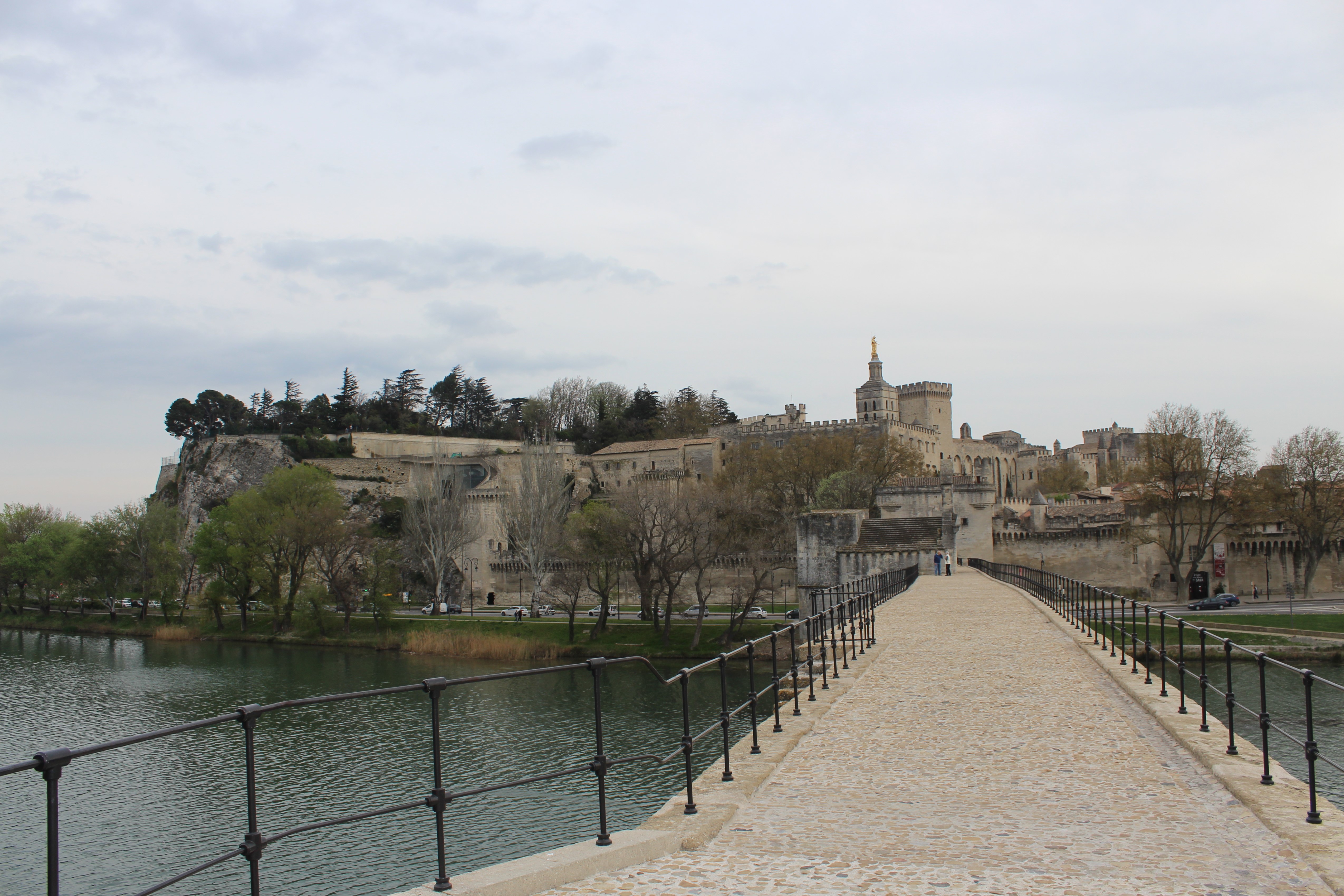
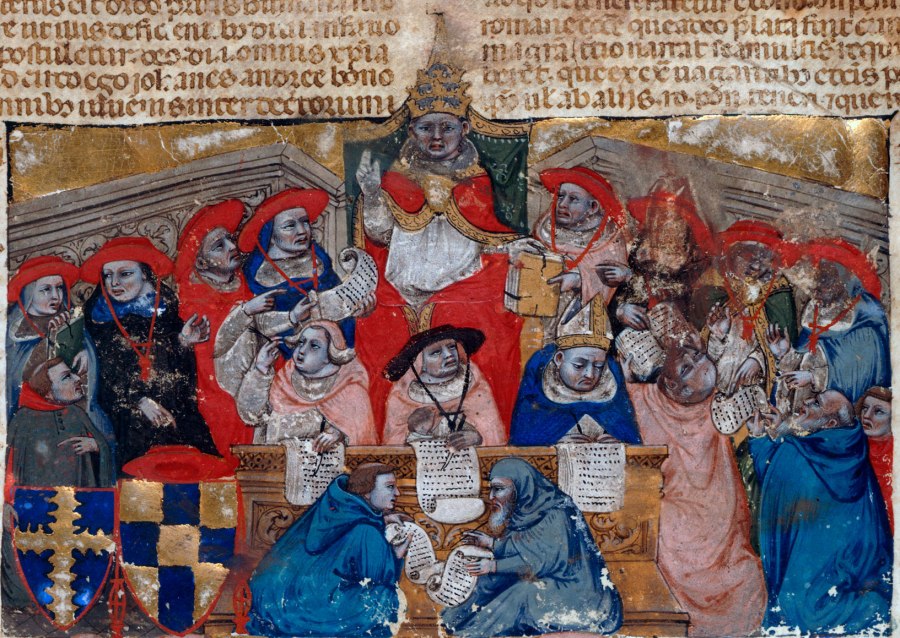
Avignon is a small city on the Rhône River in the south of France, where the popes resided from 1309 to 1376. It was again a papal residence during the Great Western schism of 1378-1417. But why did the Vatican interpret its mention as a veiled threat? In the hundred years that the popes resided in Avignon, the French monarchy did not actually “use military force to bend the Bishop of Rome to its wishes.” The French kings used military force against a pope only once, and this was before the time of the Avignon popes. But that episode had led (indirectly) to the popes taking up residence in Avignon. And the memory of the violent encounter was enough to make future popes comply with the French kings’ wishes for a long time after.
The conflict began in 1303, when Philip IV of France sent out a small band of soldiers to capture Pope Boniface VIII in his residence in Anagni and bring him to trial in France on a number of trumped-up charges, including simony (taking bribes in exchange for ecclesiastical positions), heresy, and sodomy.
He did this because France’s historically close relationship to the papacy made him feel entitled to judge the pope. In the thirteenth century, the Kings of France had come to see themselves as protectors of the interests of the Holy Church. Known for his great piety, King Louis IX (1226-1270), ‘Saint Louis’ (for whom French fur traders would later name a town on the Mississippi), gained the title ‘rex christianissimus,’ the most Christian king. Louis was extremely pious (some would even call him bigoted), a staunch supporter of the papal policy, and a crusader. By contrast, the Holy Roman Emperor, traditionally the protector of the interests of the Church and the papacy, had by this time become its most hated adversary. The Emperor Frederick II (1194-1250) was even labeled ‘antichrist’ by Pope Innocent IV, for actively resisting papal interests in Italian politics. The French kings, by contrast, saw themselves as the pious defenders of the Church’s interests.
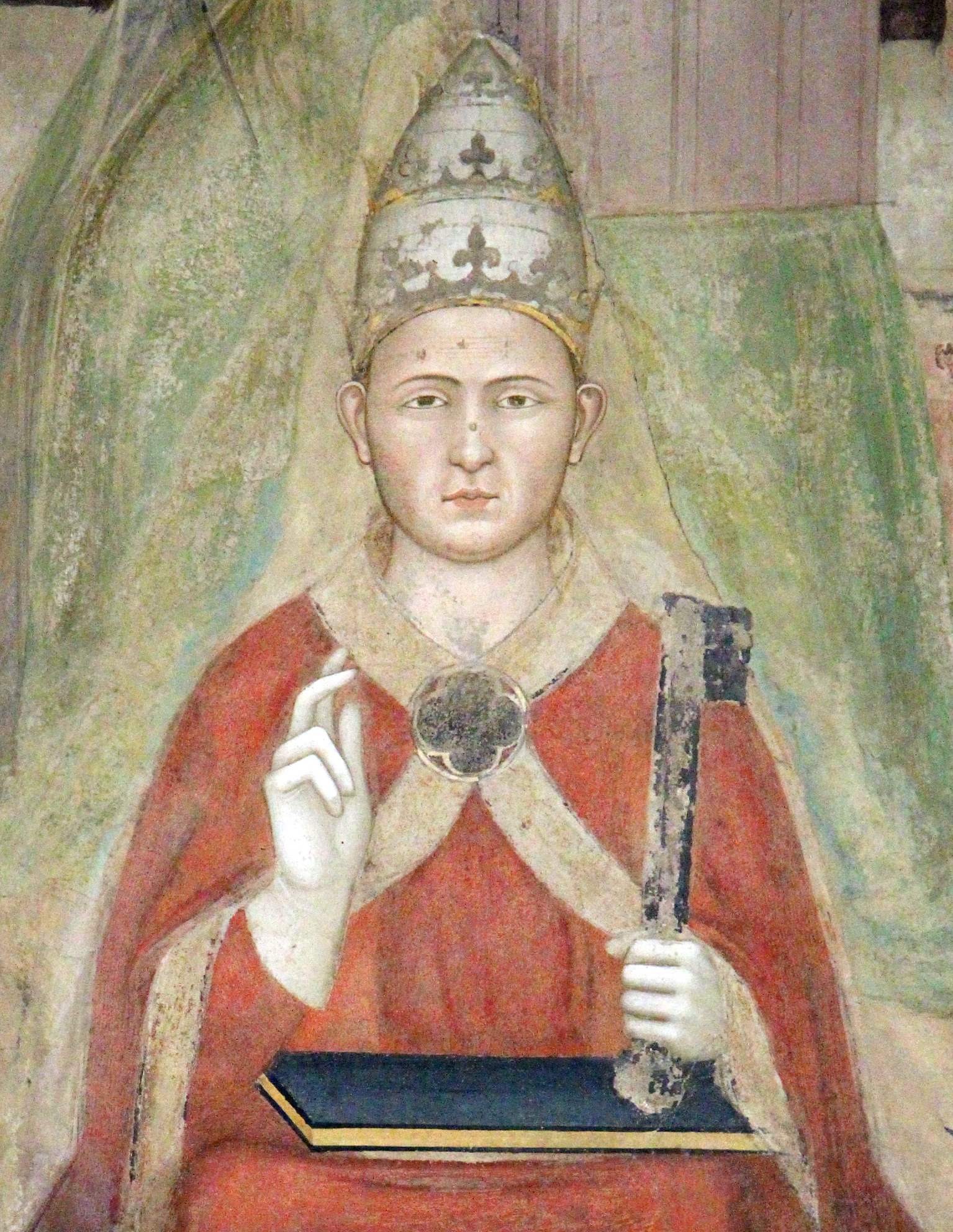
But not all kings of France were as pious as Louis IX. Philip IV (r. 1285-1314), Louis’s grandson, was more ruthless and ambitious, and tried to use the church as an extension of royal power in his kingdom. Pope Boniface VIII (r. 1294-1303) aimed to restore the church’s case against royal overreach in a series of papal bulls, the most notorious being Unam Sanctam (1302), in which he proclaimed the doctrine of papal supremacy over secular monarchs. Philip IV’s response was the attempted kidnapping described above. Sadly for Philip, it failed. The local population prevented the French soldiers from carrying out their plan, and the pope died soon afterward, presumably of a heart attack.
But the threat of military action continued to loom over future occupants of the See of Saint Peter. Despite his blustery proclamation of papal supremacy in Unam Sanctam, Boniface’s position within the church was precarious. The general feeling among many church leaders and laity was that the popes, in their conflict with Frederick II, had abused their authority for political gain.
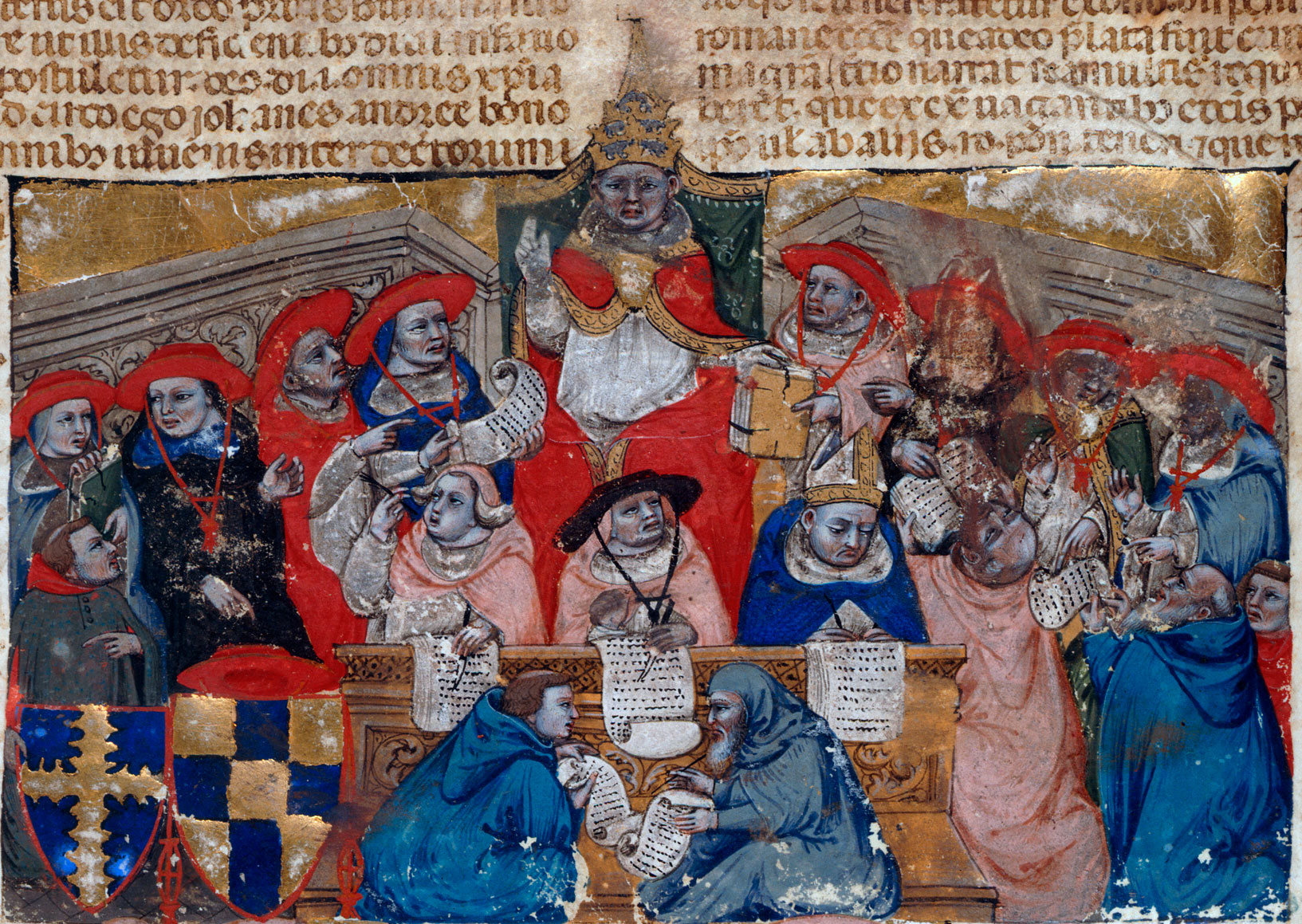
Boniface’s successor, Benedict XI, ruled for less than a year. After he died in 1304, the cardinals, mindful of the threat of intervention by the French monarchy, elected a Frenchman who took the name Clement V. Although the new pope was not exactly a sympathizer of the king, Philip IV took every opportunity to remind him of the fate that his predecessor Boniface had suffered. These veiled threats were enough to make Clement comply with the king’s wishes. Philip prevented him from travelling outside the political reach of the French king. He never took up residence in Rome, and he eventually settled in the city of Avignon. The city was not part of the Kingdom of France, but close enough for the French kings to keep a close watch on the pope’s doings.
Clement’s subsequent actions were dominated by his political concessions to the French kings. He was forced to start legal proceedings against the deceased Boniface VIII, absolve the captain who had led the raid in Anagni from any wrongdoing, and canonize Boniface’s predecessor, Celestine V (a saintly hermit whom Boniface forced to abdicate).
Clement’s greatest concession of all to King Philip of France was agreeing to the trial of the Knights Templar in 1307. This powerful and wealthy religious order stood accused of heresy, satanic rituals, and, for good measure, sodomy. For the French king, these accusations were clearly a pretext for liquidating the immensely rich and powerful organization and confiscating its assets. Philip’s coffers were always notoriously empty. In 1312, when the trial had ended, Clement assented to the suppression and dissolution of the Templars.
Thus Pope Clement was forced to do the will of the French monarch—not by direct violence, but by the memory of past violence and the implicit threat that it might be repeated. The popes were to stay in Avignon, under the French king’s watchful eye, for the rest of the fourteenth century.
By reminding the papal nuncio of the Avignon episode in papal history, or rather, by reminding him of what led up to it, the Pentagon was offering Pope Leo a stark choice between the fate of these two hapless pontiffs: resist but risk your life, or comply, and compromise your conscience. The pope is wise to stay away from the U.S.A. as long as Trump is president. It will give him the opportunity to continue to give a voice to Christian conscience, against the powers of darkness that claim to rule this world.
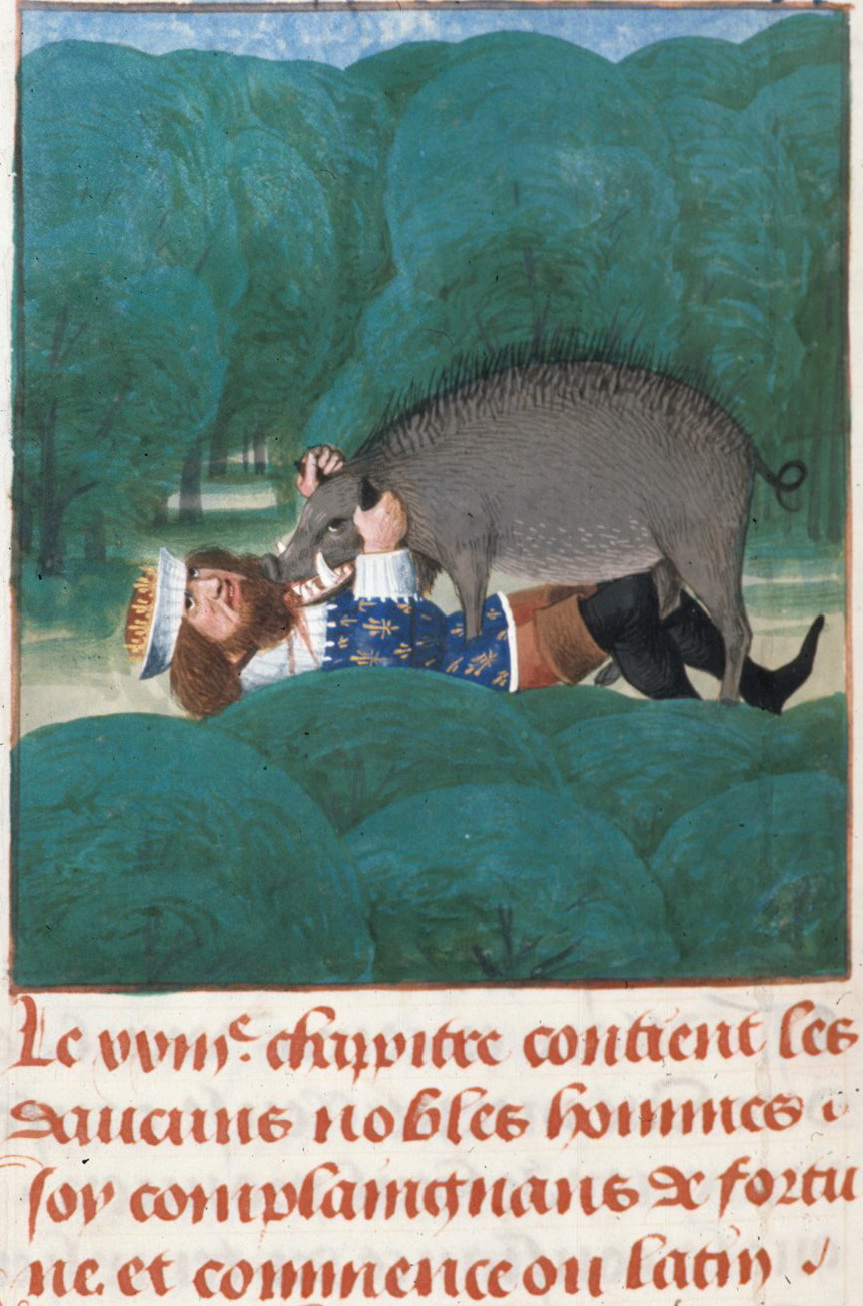
Incidentally, Philip IV did not outlive Pope Clement by very long. The monarch’s death was ignominious: he was gored by a boar in a hunting accident. Many contemporaries saw it as an act of divine retribution for his unjust persecution of the Templars.
Further reading:
Boase, T.S.R. Boniface VIII. London: Constable and Co., 1933.
Renouard, Yves. The Avignon Papacy, 1305-1403. Translated by D. Bethell. Hamden: Archon Books, 1970.
Strayer, Joseph R. The Reign of Philip the Fair. Princeton: Princeton University Press, 1980.
Rollo-Koster, Joëlle. Avignon and Its Papacy, 1309-1417. New York: Rowman & Littlefield, 2015.
Frans van Liere is Professor of History and director of the Medieval Studies program at Calvin. He teaches world history, medieval history, and history of the book. He grew up in the Netherlands and studied theology and medieval studies at the University of Groningen. His research interests are medieval biblical exegesis, twelfth-century intellectual history, and the late medieval papacy. He lives in Grand Rapids, MI with his wife, two sons, and two cats named Pippa and Emma.

 Historical Horizons