Eric Washington
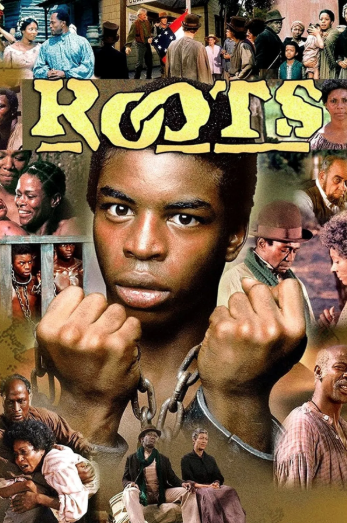
The television miniseries Roots premiered on ABC on January 23, 1977, and ran for eight straight nights. This was the country’s preparation for Black History Month, which was its second month-long commemoration. Watching Roots was a communal viewing for African American families. My family watched it together on my parents’ color television. I had just celebrated my eighth birthday less than a week before the premiere. I was in the fourth grade attending an integrated Catholic elementary school. The morning after watching an episode of Roots we African American kids huddled up and discussed what we had seen the night before. Despite being so young, we were able to process the horrors of slavery, and we know that the images seen on the small screen represented what our enslaved ancestors endured. We often expressed our anger at white people; we were ready to fight back in the name of our ancestors. The characters and portrayal of slavery’s brutality have been etched in my mind for nearly 50 years. That’s how powerful Roots was for me and all the African Americans I knew. In January 1977, I had no idea that watching Roots was the beginning of my journey into Black History.
This year marks the 100th commemoration of Black History Week and Black History Month. In February 1926, historian Dr. Carter G. Woodson and the Association for the Study of Negro Life and History (now the Association for the Study of African American Life and History) inaugurated Negro History Week. According to historian Pero Dagbovie, “Woodson sought to popularize black history in black communities while integrating the teaching of black history into secondary and high schools throughout the nation.”1 Woodson chose the second week of February to correspond with the birthdays of Abraham Lincoln (recognized as the “Great Emancipator” then) and Frederick Douglass, who was the most famous African American during the 19th century.2 From the very start of what is now Black History Month, the commemoration has been for the entire African American community from the school child to the academic.
In 1976, President Gerald Ford proclaimed the national recognition of Black History Month:
The last quarter-century has finally witnessed significant strides in the full integration of black people into every area of national life. In celebrating Black History Month, we can take satisfaction from this recent progress in the realization of the ideals envisioned by our Founding Fathers. But, even more than this, we can seize the opportunity to honor the too-often neglected accomplishments of black Americans in every area of endeavor throughout our history.3
What better way to celebrate Black History Month 1977 than viewing Roots and reflecting on the African Americans’ journey from Africa to the Americas where they would endure 256 years of chattel enslavement, hope of freedom during the Civil War and Reconstruction, the snatching away of that tenuous freedom during Jim Crow, and the renewal of that hope of freedom during the Civil Rights Era. In the aftermath of viewing Roots, thousands of African Americans began to do their own hard and tedious work of locating their roots on the North American continent and the continent of Africa.
It was during my days as a sociology undergraduate that I had to craft a Family Tree in two different sociological courses. For the first project, I had to enlist the help of my mother’s oldest sister who gave me the names of my great grandparents, and one second great grandmother. My second great grandmother was born into slavery and had a white Creole father and an enslaved African American mother. On my father’s side, I only had my grandparents. That would change after the family reunion on that side of the family. With new information, I was able to fill in that side of the Family Tree for the second assignment. I had the names of a set of third great grandparents. This work triggered my interest in finding out my family’s origins beyond slavery in North America. I wanted to learn about Africa.
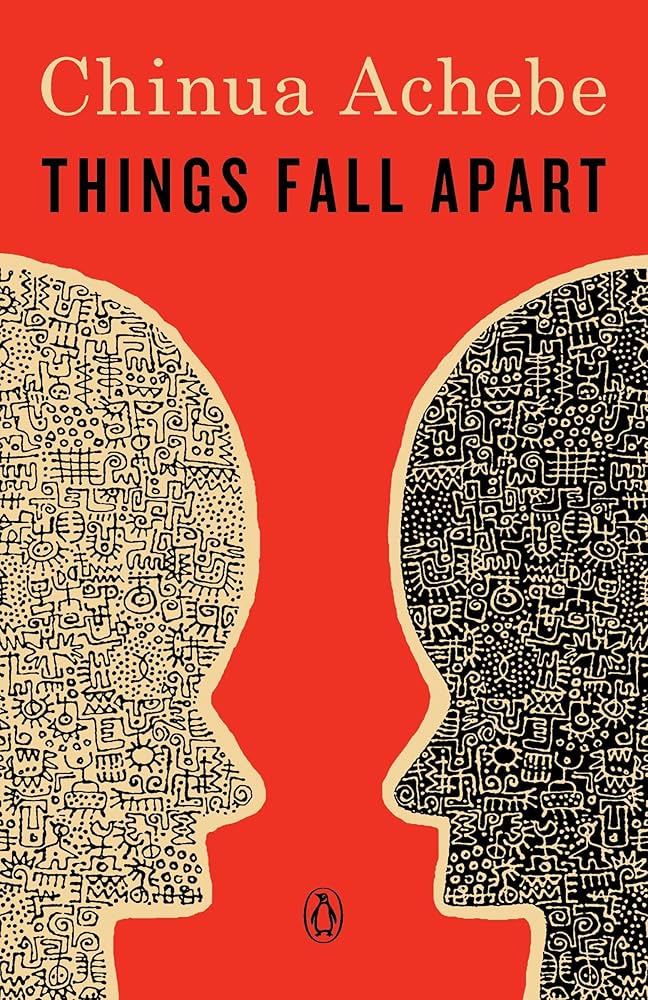
I decided to minor in Afro-American history (that’s what the minor was called then). The curriculum included taking two courses in African history. Taking those courses changed my life. Other than learning about European imperialism and colonialism in Africa, and how Africans struggled against colonialism to achieve independence in the 1950s and beyond, one reading engaged me like no other. I read Chinua Achebe’s Things Fall Apart. That novel awakened within me only what I can refer to as my West African self. Until then, I never had a conscious thought about being an African person. Reading about Igbo culture (the Igbo are the ethnolinguistic group Achebe writes about who are in eastern Nigeria), captured me. I found myself immersed in the culture and rooting for the protagonist, Okonkwo, as he attempted to preserve Igbo customs under attack by Christian missionaries and British colonialists. I walked away from that novel feeling in my bones that I was Igbo.
This is part of my journey. As I have researched and taught African and African Diaspora history over the last 20 plus years, I have continued my search for my African origins. After returning from Ghana in 2018, I decided to take several DNA tests. All the tests revealed that a significant part of my African ancestry traces back to what is now Nigeria. As DNA results update each year, I have found that my ancestry is not merely Nigerian, but from various ethnolinguistic groups in that country, including Igbo. All those years ago reading Things Fall Apart for the first time and sensing that I was an Igbo descendant has been confirmed. This journey into Black History has been divinely ordered. It is truly my calling.
- Pero Gaglo Dagbovie, What is African American History? (Polity, 2015), 16. ↩︎
- Deborah Gray White, Mia Bay, and Waldo E. Martin, Jr., Freedom on My Mind: A History of African Americans with Documents, Third Edition (Bedford/St. Martin’s, 2021), xxviii. ↩︎
- https://www.presidency.ucsb.edu/documents/message-the-observance-black-history-month-february-1976 ↩︎
Eric Michael Washington is professor of history and director of Africana Studies at Calvin University. He is primarily interested in studying the African American church from its development in the late 18th century through the 19th century, and individual Christians, primarily Calvinists. He also has a growing academic interest in the “Black and Reformed” movement in North America.

 Historical Horizons